


Most Estate Planning Law Firms Have the Same SEO Problem
We audit a lot of estate planning websites. After a while, the pattern stops feeling like a finding.
Most firms think they have an SEO problem. In reality, they have a website structure problem.
The typical site looks like this:
- Home
- About
- Practice Areas
- Contact
- Blog
From the owner’s perspective, the firm is covered. From Google’s perspective, most of what the firm actually does doesn’t exist.
The gap is critical. An estate planning attorney knows that:
- probate is a different process from trust administration;
- a special needs trust operates under different rules than a revocable living trust;
- powers of attorney and healthcare directives serve different functions and attract clients at different moments in life.
That’s basic knowledge for anyone practicing in this area, but Google doesn’t know any of it. If there are no dedicated pages for these topics, search engines have no evidence the firm handles those matters. A single paragraph buried in a catch‑all “Estate Planning” page doesn’t create visibility.
The solution is granularity — not fragmentation, but deliberate, meaningful separation of distinct services into pages that can each be found on their own terms.
💡Best Practice: Try looking at your site the way a first‑time client would — someone who doesn’t know the right terminology, who might search “what happens to a trust when someone dies” rather than “trust administration attorney.” If your site doesn’t have a page that speaks to that question, you’re invisible for it.
How Search Engines Evaluate Modern Law Firm Websites
The old‑school keyword‑game SEO is obsolete. Ten years ago, the plan was to put “estate planning attorney” in the title, repeat it in the body, build some links and wait.
Search systems today operate much closer to topic mapping. Google is closely examining if a website, taken as a whole, is a credible resource on a subject — whether the content signals genuine expertise in a practice area or just a surface‑level presence.
The firms that consistently rank well share a few structural characteristics:
- dedicated service pages for each matter they handle
- educational content that supports those pages
- clear internal linking between related topics
- a site architecture that makes the relationships between practice areas legible
In essence, SEO‑successful law firms build ecosystems rather than collections of individual pages.
The basic question of legal SEO today is: “Does my website demonstrate that I understand this area of law well enough to be trusted with it?”
💡Best Practice: Audit your site by listing every service you actually handle in consultations, then check whether each one has a dedicated page. The gap between that list and your current site architecture is your visibility gap.
Why Most Estate Planning Websites Are Invisible for Valuable Searches
Take a firm that handles wills, trusts, probate, trust administration, powers of attorney and healthcare directives. It is a competent, experienced, genuinely capable law practice.
Every aspect of its capabilities is described on a single “Estate Planning” page.
From a search perspective, that page has one job: rank for “estate planning attorney.” In contrast, for more specific search queries the website needs to rank for, the law firm won’t show up:
- How does trust administration work after a parent dies?
- Do I need a special needs trust for my adult child?
- What’s the difference between a revocable and irrevocable trust?
This is the core problem. People search for answers to specific questions at specific moments. The person researching trust administration after a death is in a completely different situation than someone who just got married and is thinking about a will for the first time. One page cannot serve both — and Google has learned to model that distinction.
When Google evaluates whether a page deserves to rank for a query, it’s asking whether that page is the most focused, useful answer available for that specific question. A page covering six services in 800 words rarely wins that comparison against a page built for one of them.
In the end, the law firm in this hypothetical scenario ranks for almost nothing because the structure doesn’t match how people actually search.
The Hidden SEO Advantage of Service Depth
When we look at estate planning websites that consistently perform well in organic search, the pattern isn’t what most attorneys expect.
What is the recipe for success for a law firm website? It seems it is domain authority and an aggressive backlink profile plus technical sophistication.
In reality, the cornerstone of organic search performance is service depth.
Service depth means building a distinct, substantive page for each matter the firm actually handles — and then supporting those pages with content that addresses the specific questions clients bring to each one. Everything else compounds on top of it. Without it, the other work has nowhere to land.
The highest‑performing estate planning sites tend to have separate pages across four areas:
Instead of fighting for the single main core keyword, the structure of the service pages makes it possible to attract users who already have a precise intent.
- Query “How to avoid probate in Texas?” lands on “probate avoidance strategies.”
- Query “Special needs trust for disabled adult child” goes to “special needs trust.”
Each page earns its rankings independently — and together, they make the site visible across the full range of searches estate planning clients actually perform.
The key word is meaningful. These aren’t keyword pages — thin copies of each other with a different service name swapped in. Each page needs to earn its existence. A page on special needs trusts should explain what they are, who needs them, how they interact with government benefits, and what the process looks like — because that’s what someone searching for that topic actually needs to know.
🛑Avoid: Creating pages that are structurally separate but substantively identical. Google recognizes thin duplication. Each page needs genuinely distinct content to justify its existence.
Why AI Search Rewards Structured and Focused Websites
The natural assumption is that AI search works like Google — biggest, most authoritative site wins.
Surprisingly, AI systems — ChatGPT, Perplexity, Google’s AI Overviews, Gemini — frequently cite pages regardless of their domain authority because those pages answer a single question with unusual clarity and completeness.
A page dedicated entirely to explaining how a revocable living trust works — what it is, how it differs from a will, what happens to it after death, how to fund it — has a real advantage over a broad estate planning page that mentions trusts in two paragraphs. The focused page gives an AI model something clean to extract. The broad page gives it noise.
In practice, an estate planning firm needs pages that are genuinely, specifically useful — pages that answer the question a prospective client is actually asking, not pages that gesture at a topic and move on.
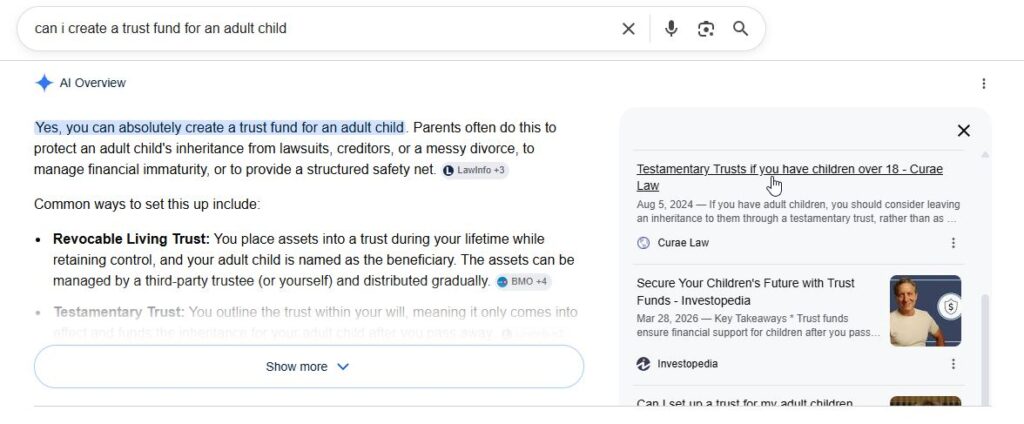
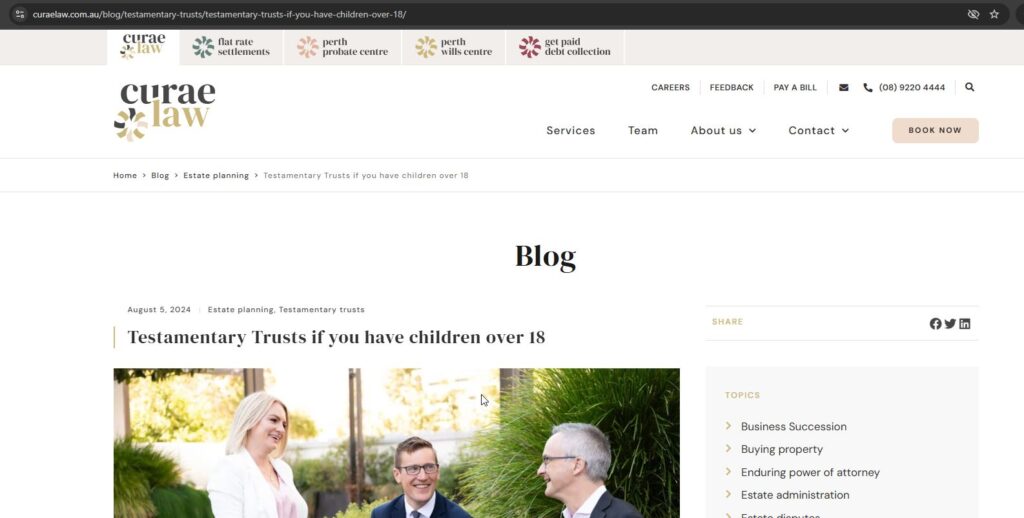
One caveat, worth saying plainly: the internet is already full of content that technically answers questions and is formatted for skimmability. AI systems trained on enough of that content are getting better at telling the difference between a page adding something real and a page recirculating what’s already everywhere.
🛑Avoid: Formatting your content primarily for skimmability — short paragraphs, bullet‑heavy structure, thin sentences designed to be parsed rather than read. AI systems are increasingly good at recognizing when a page has nothing original to say.
The Content Cluster Strategy Most Law Firms Miss
Most firms, once they accept they need more content, make the same mistake: they start publishing ad hoc. The deciding factor is whether — presumably — people will need the content. Posts on seemingly searchable topics, like estate planning tips or probate, are published but traffic doesn’t move.
The problem is the architecture.
Isolated articles — even well‑written ones — rarely build the kind of topical authority that moves rankings. Search engines don’t just evaluate individual pages in isolation; they evaluate how a site’s content holds together.
The approach that compounds is the content cluster: a core service page supported by a set of articles that address the specific questions clients have about that service.
Take living trusts as an example.
Parent page: Living Trusts
Supporting articles:
- How to Create a Living Trust for Your Family
- When You Need a Living Trust Instead of a Will
- How Much It Costs to Set Up a Living Trust for Your Estate
- How to Update Your Living Trust After Marriage, Divorce, or Having Children
- Common Living Trust Mistakes That Can Delay Inheritance
Each article handles one question with real depth and links back to the service page. The service page links out to all of them.
Now Google sees a service page, a set of supporting resources and clear topical relevance between them — a far stronger signal than the same five articles published as disconnected blog posts.
For estate planning firms, the natural clusters have already been defined:
- Trusts
- Probate
- Powers of attorney
- Healthcare directives
Each area has a service page at the center and a set of client questions that deserve their own focused treatment. The work is identifying those questions — not the generic ones every competitor has already covered, but the specific ones your clients actually ask in consultations — and building content with the depth only a practitioner can provide.
Internal Linking Is More Important Than Most Lawyers Realize
Internal linking is the practice of connecting pages on your own site to each other — and it matters because those connections tell both search engines and prospective clients how your practice areas relate to one another.
The practical test is simple: pick any page on your site and ask whether someone who landed there with no prior knowledge of your firm could navigate to every related service or question they might have. If the answer is no, there are gaps — and those gaps are leaving authority on the table.
Done well, internal linking creates a web of expertise:
| A probate page should link to | A living trust page should link to |
|---|---|
|
|
For AI search, the case is stronger still. An AI model isn’t just reading individual pages — it’s building a picture of what your firm knows and how deeply. A well‑linked site signals that your practice areas aren’t just listed, but understood in relation to each other. That coherence is what makes AI systems more likely to surface your content.
💡Best Practice: Ask your AI tool to analyze your own website first and build a hierarchical structure of your content by meaning. Use that structure to understand which pages should link to each other and how your internal linking can better guide users and search engines through your key practice areas.
What an Effective Service Page Actually Looks Like
A service page is a dedicated page on your website built around a single practice area or legal service — not estate planning in general, but living trusts specifically, or probate administration, or special needs trusts. Its job is two‑fold: to signal to search engines that your firm has genuine depth in that area, and to give a prospective client enough clarity to decide whether to contact you.
| Section | What it’s for | Best practice |
|---|---|---|
| 1Service introduction | Tells the reader — and Google — exactly what this page is about from the first paragraph. | Define the service in plain language. Assume the reader knows nothing about legal terminology. One to two short paragraphs is enough. |
| 2Problem it solves | Establishes why someone would need this service in the first place. | Ground this in real situations: a parent who died without a trust, a spouse who can’t access accounts, a business owner with no succession plan. Specific scenarios outperform abstract explanations. |
| 3Who typically needs it | Helps prospective clients self‑identify — and signals to search engines which queries this page is relevant for. | List client profiles and life events: young families, business owners, blended families, aging parents. The more specific, the more useful. |
| 4What’s included | Sets clear expectations about deliverables and removes ambiguity about what the firm actually does. | Name the documents created, the decisions the client will need to make, and what they walk away with. Vague descriptions create hesitation. |
| 5Process overview | Reduces the perceived friction of getting started — the most common reason prospective clients delay. | Walk through the steps in plain language. Include realistic timeframes. A client who knows what to expect is more likely to book a consultation. |
| 6Risks of doing nothing | Addresses the inertia that keeps qualified prospects from acting. | Be factual, not alarming. “Without a trust, your estate goes through probate — a public, court‑supervised process that can take months” is more effective than vague urgency. |
| 7Frequently asked questions | Answers objections before they become reasons not to call. Also one of the most‑cited page elements in AI search results. | Use the actual questions your clients ask in consultations — not generic SEO questions. Five to eight specific, honestly answered FAQs outperform twenty thin ones. |
| 8Call to action | Gives the reader one clear next step at the moment they’ve decided to move forward. | One action, stated plainly. “Schedule a consultation” with a phone number or booking link. Don’t offer three options — it creates decision paralysis. |
The goal isn’t to tick eight boxes. The goal is to create a page where a prospective client can arrive with a genuine question and leave with enough clarity to make a decision. That kind of page earns its rankings. It also converts better — which is, after all, the point.
The Role of Backlinks in Legal SEO
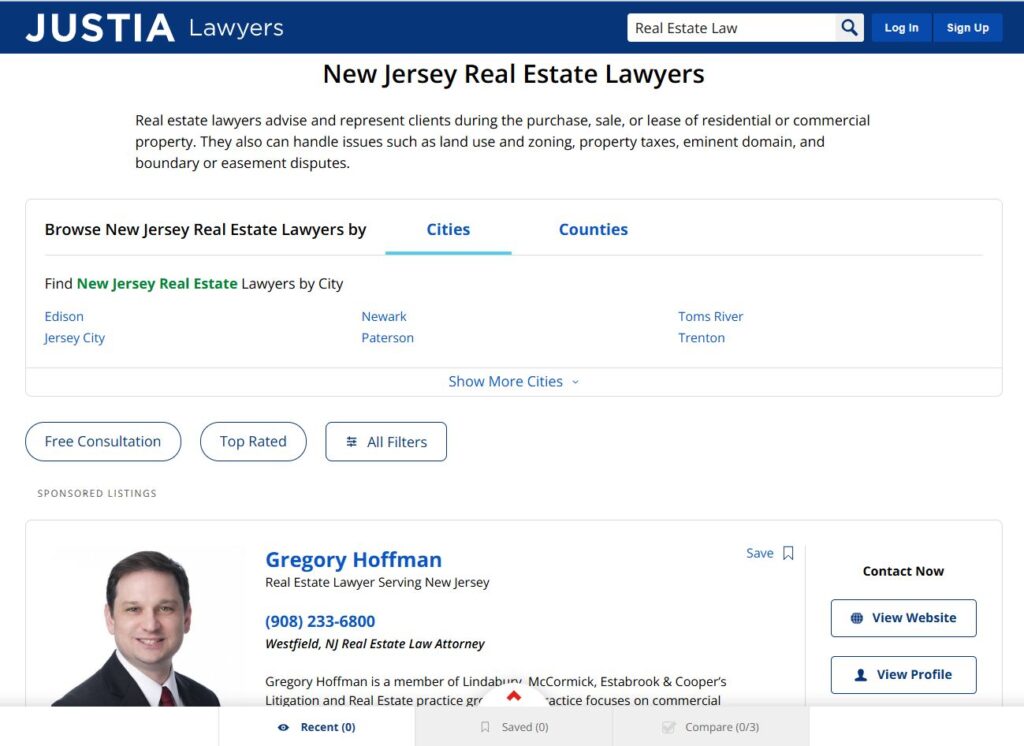
A backlink is an external site linking to yours — a signal that another source considers your content credible enough to reference. Mentions in these resources tell Google and AI something about how your site is regarded beyond its own walls:
- legal directories
- local business citations
- professional associations
- media mentions
- industry publications
Importantly, backlinks come later in the growth sequence. A site with thin content doesn’t benefit from links the way a well‑structured site does. Pointing authority to a weak page barely makes it move, because authority compounds on top of something real.
The same logic applies to technical SEO. Most estate planning firms on modern platforms don’t have a meaningful technical problem — pages load fine, sites are mobile‑friendly. Chasing a PageSpeed score while service coverage is thin is the wrong order of operations. Fix the structure first.
🛑Avoid: Treating a good technical SEO score as evidence that your site is performing well. A site can pass every technical audit and still be effectively invisible because it lacks service coverage, topical depth, and meaningful internal linking.
For estate planning firms, the most reliable links tend to come naturally to a firm active in its professional community with a site worth linking to.
The Real SEO Growth Formula for Estate Planning Firms
The sequence is straightforward:
→
Service coverage
→
Content clusters
→
Internal linking
→
Indexation
→
Authority building
→
Rankings
→
Traffic
→
Consultations
→
Cases
→
Revenue
The firms that consistently win organic search aren’t necessarily the ones with the biggest budgets or the longest head start. They’re the ones that built the foundation correctly and stayed consistent. The formula isn’t complicated. It’s just less exciting than the shortcuts most agencies prefer to sell.