


Section 1. Introducing Legal SEO
SEO, or Search Engine Optimization, is how your firm earns visibility where clients actually search. Instead of paying for every click, you improve your site so it appears higher in organic (non‑paid) results on Google and other search engines.
When someone types “personal injury lawyer near me”, search engines scan billions of pages and rank them by relevance, quality and authority signals. For law firms, those signals include clear page structure, readable content and consistent use of headings, internal links and other elements that show you are a credible source.
The Inbound Mindset
Legal SEO is online hygiene for your firm, not a megaphone. It does not push your name in front of people who are not looking; it makes your voice easier to find at the moment someone is already searching for help you can actually provide.
When someone types “What should I do after a car accident?”, your content should feel like a calm, knowledgeable voice in a stressful moment.
ROI of SEO
Among the channels available to law firms, SEO is the one that compounds over time. A single well‑structured, well‑written article can bring qualified visitors for years after it is published. In the age of AI, the same article can also be cited in AI‑generated answers, extending its reach beyond classic search results.
As your site earns more authority, rankings improve on their own. And as organic traffic grows, your cost per lead steadily drops — without any corresponding increase in spend.
SEO vs. PPC
Pay-per-click, or PPC, ads are irreplaceable when it comes to short-term ad campaigns. You can go from invisible to the top of the results page in a day, but you pay for every visit, and costs rise in competitive practice areas. The most marketing-savvy firms use both — but SEO is what builds a lasting edge.
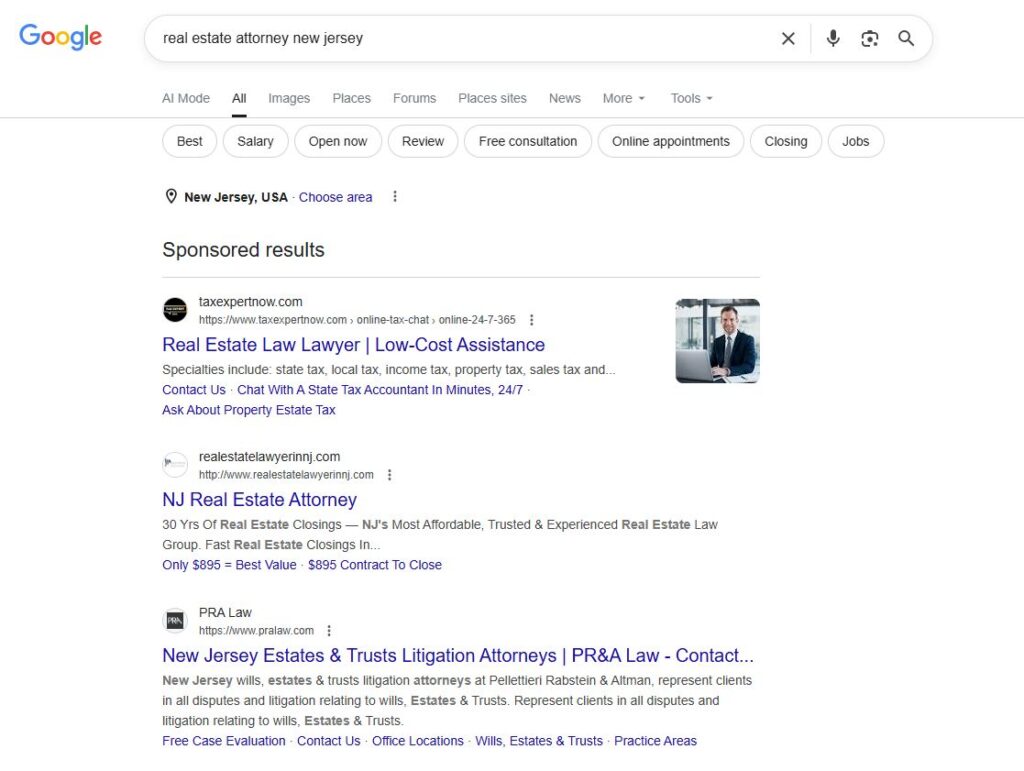
The most marketing-savvy firms use both — but SEO is what builds a lasting edge. One well-ranked article can bring in qualified leads for years at virtually no marginal cost, while even your best PPC campaign stops the moment the budget is paused.
| Pay-Per-Click (PPC) | SEO |
|---|---|
|
|
The downside of PPC is that it doesn’t create any residual value. With SEO, every substantive article, every relevant backlink, and every technical fix becomes part of an asset that keeps working in the background.
SEO is not “free”. It still requires time, expertise, and steady execution, but for most firms, the long‑term return is hard to match with any other single channel.
Section 2. Tricks and Tactics. Why SEO fails without a strategy
Documented plan
To many law firms, regardless of their size and age, SEO is like an alternative to proper marketing. Not knowing what to do and unfamiliar with the world of marketing, lawyers, attorneys and law firm owners publish random blogs chasing trending keywords without a plan.
When nothing changes 6 months later, SEO is labeled “useless”.
An effective SEO strategy organises content by practice area, target audience, and search intent. That means defining your geo-markets clearly, building structured content clusters, and distinguishing between what your firm does and what your clients actually need to know.
💡Best Practice: Map your content to three axes before writing anything: practice area, geographic market, and search intent. A post written for the right person at the right moment of decision is worth more than ten generic articles.
Brochure vs. Resource
Most law firm websites make the same mistake: they talk about the firm instead of helping the client. They list practice areas, attorney credentials, and awards. They look professional. But they don’t answer the questions a frightened, confused person types into Google at midnight.
That’s the difference between a brochure site and a resource site. A brochure site is about you. A resource site is for them. And Google — along with every prospective client who lands on your page — strongly favours the second.
A true resource site answers the questions people are actually asking: What happens if I can’t afford a lawyer? How long will my case take? What should I do in the first 24 hours after an accident? When your website becomes the place people turn to for clear, honest answers, trust follows — and so do rankings.
Understanding the audience
Brochure and resource pages are equally important. A brochure is a snapshot or a virtual handshake with your law firm, often discovered through a general search like “personal injury lawyer” at various stages of decision-making. A resource page targeting “motorcycle accident lawyer in San Diego” speaks directly to someone with an urgent need — and converts at a far higher rate.
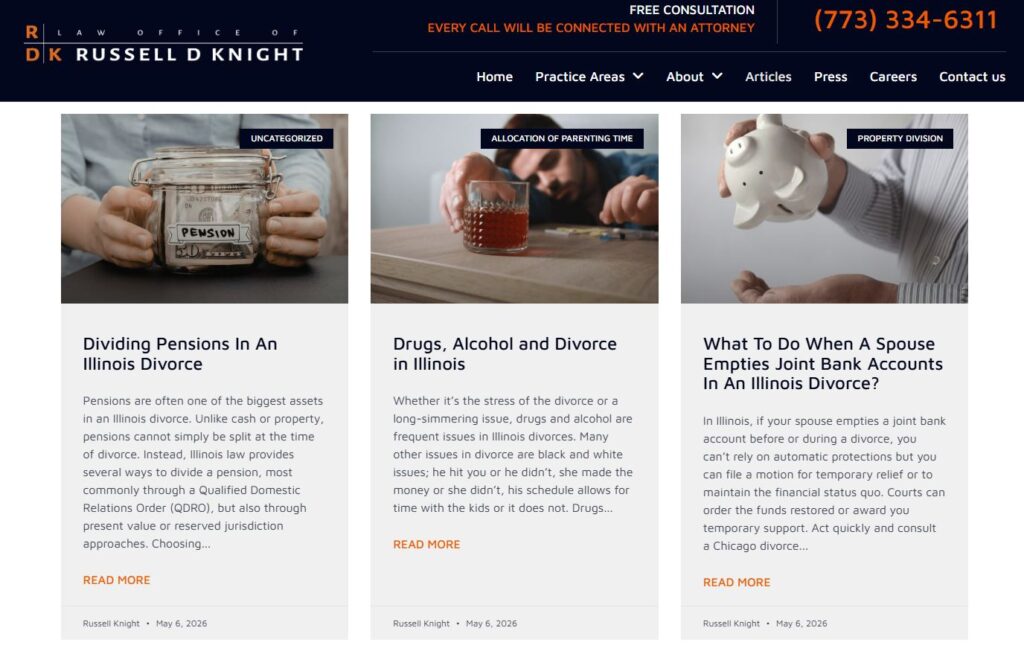
In a nutshell, are you writing for someone in crisis who needs immediate reassurance, or someone researching their options weeks before a court date? The answers shape everything: the structure, the keywords, the calls to action and the overall SEO strategy.
The firms that win at SEO don’t try to speak to everyone. They identify their highest-value client segments and build content that speaks directly to those people’s fears, questions and decisions.
Section 3. Content strategy
YMYL and EEAT in legal marketing
Legal websites sit in Google’s Your Money or Your Life (YMYL) category, which is reserved for topics where low-quality or incomplete information can seriously harm people. For law firms, that means accuracy, clarity, and honesty are the baseline for every practice page, blog post and FAQ.
Google looks at YMYL content through its EEAT lens:
- Experience: real case insights, on‑the‑ground legal work and lived context, not generic legal theory.
- Expertise: clear, precise explanations from someone with the right credentials written in language a non‑lawyer can follow.
- Authoritativeness: recognition and references from other credible legal sources — bar associations, courts, respected publications.
- Trustworthiness: verified author bios, visible responsibility for the content, current information and realistic claims.
Your content strategy should make each of these visible, without turning every page into a self‑promotion exercise.
🛑Avoid: Publishing legal content under a generic “Staff Writer” or “Admin” byline. Anonymous authorship is a direct EEAT signal problem for law firm sites.
Content formats in legal marketing
Some formats work especially well for YMYL topics and clearly signal that your site meets EEAT standards.
- Detailed practice area pages for each location and case type you actually serve help search engines understand what your firm does and where.
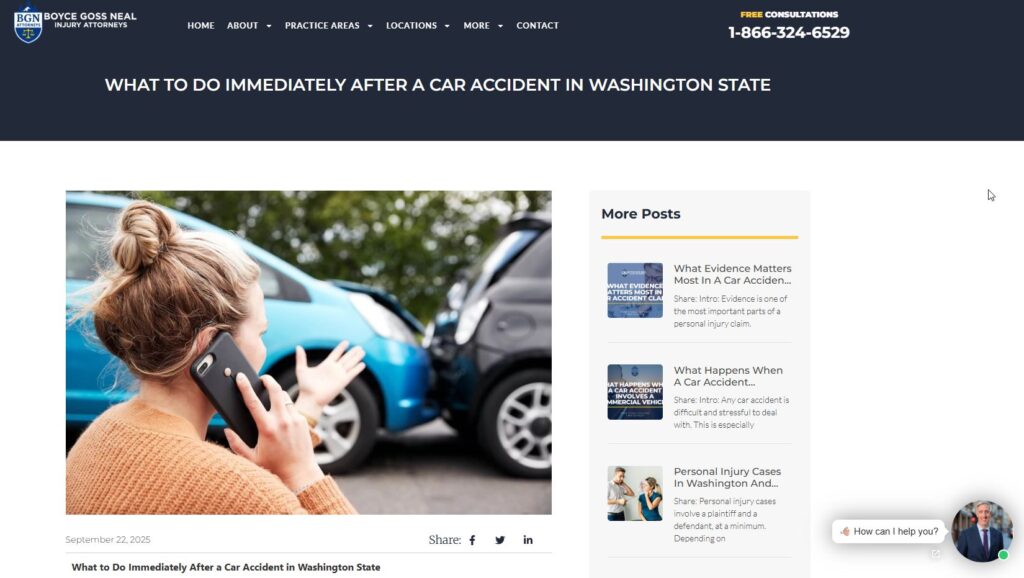
- Evergreen guides — for example, “Step‑by‑step after a California car accident” or “How personal injury settlements work in New York” — stay relevant over time and demonstrate depth in a specific area.
- Frequently asked questions (FAQs) feed both classic snippets and AI overviews, because they mirror the exact phrases people type into search.
- Local content — for example, “What to know about slip‑and‑fall claims in Chicago” — builds geo‑specific relevance and shows you are not publishing generic advice.
Uniqueness in content
Publishing content for the sake of having more pages is not enough. Most legal topics already have hundreds of similar articles. Adding another surface‑level post rarely moves rankings or conversions.
To stand out, each substantive piece should add something that does not already exist on the first page of results for that topic. That can look like:
- A specific case example (with details anonymised) that shows how a principle plays out in real life.
- Local legal nuance — for instance, how your state’s limitation periods or damages caps differ from what national guides describe.
- A clear, step‑by‑step breakdown of a process: what happens first, what documents are needed, what decisions the client has to make.
- Simple, transparent timelines or ranges for key stages, with caveats where needed.
Search engines reward content that goes beyond restating what is already on page one. Prospective clients do the same: they recognise when you are adding real insight versus repeating copy of a copy of a copy.
Converting content
Visibility without conversion is just traffic. A working content strategy does two things at once: it helps people understand their situation and it gives them clear, low‑friction ways to take the next step with your firm.
- Short, focused e‑books or guides that go deeper on a single topic (for example, “First 30 days after a workplace injury”), offered in exchange for an email.
- Case studies that walk through real matters from problem to resolution, highlighting the decisions, trade‑offs and outcomes, not just the final result.
- Checklists and templates, such as “What to bring to your first consultation” or “Information to collect after an accident” — that people can use immediately.
- Simple, prominent calls to action: request a callback, schedule a consultation or send a question securely.
These assets turn an anonymous visitor into a known lead, without aggressive pop‑ups or pressure tactics.
Section 4. Local SEO
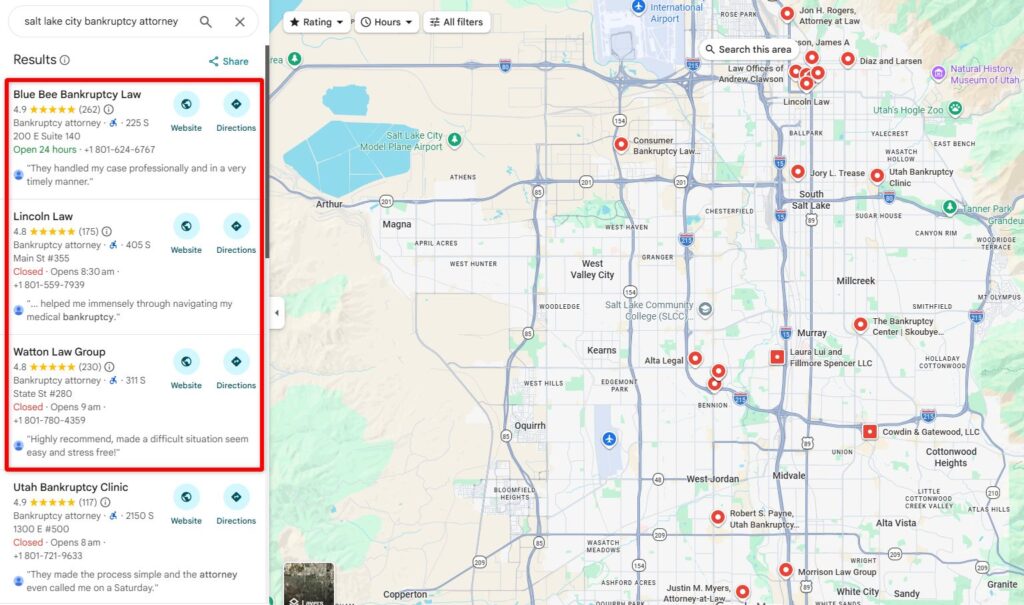
Local SEO is about making sure your firm shows up when someone nearby searches for legal help right now. It focuses on the queries that matter most to most law practices: “divorce attorney near me,” “criminal defense lawyer in Vilnius,” or “injury lawyer in [your city].” These searches trigger a distinct results layout where the sweetest spot is Google’s local 3-Pack.
To compete there, you need consistent, boring‑but‑essential execution:
- Keep your GBP fully completed and current: accurate categories, hours, addresses, photos, services, and regular posts.
- Make sure your NAP (Name, Address, Phone) is identical across Avvo, Justia, FindLaw, your bar profile, and other major directories.
- Build a steady stream of recent client reviews, within bar rules, and respond professionally to every one — especially the critical ones.
- Create focused landing pages for each city or region you genuinely serve, with real local details instead of copy‑paste location swaps.
💡Best Practice: Respond to every Google review — positive and critical — within 48 hours. Response rate and recency are GBP signals, and a thoughtful reply to a negative review often says more to prospective clients than five glowing ones.
🛑Avoid: Thin city pages that repeat the same template with only the location name swapped out. Search engines detect this quickly — and so do prospective clients.
Section 5. Technical SEO
Technical web audits
Even strong content will underperform if the technical foundation is weak. Broken links, crawl errors, and indexing issues are small problems on their own, but together they can quietly suppress your rankings for months.
At CounselRank, the technical audit starts with our team, not with a tool. We review your site’s structure, existing content, and search performance to understand what is actually blocking visibility: which pages are not being indexed, which templates are slow, where internal links break, and how your site compares to real‑world competitors in your practice areas.
Core Web Vitals
Speed, mobile responsiveness, and layout stability are now standard health metrics for any site, and since 2021 Google has treated them as direct ranking signals under Core Web Vitals. For legal searches, where many users are stressed and on mobile, these signals carry extra weight.
- Page speed — how quickly the main content becomes usable — is usually dragged down by uncompressed images, heavy JavaScript or slow servers.
- Mobile responsiveness is mostly about design decisions. Layout, font sizes, tap targets and navigation all need to work cleanly on a small screen.
- Layout stability describes how much the page shifts as it loads. Sudden jumps are often caused by missing size attributes on images and late‑loading fonts.
💡Best Practice: Test your contact form and consultation booking flow on a real mobile device every quarter. If a stressed person on a phone can’t submit an enquiry in under 60 seconds, the conversion opportunity is gone.
Schema markup and security
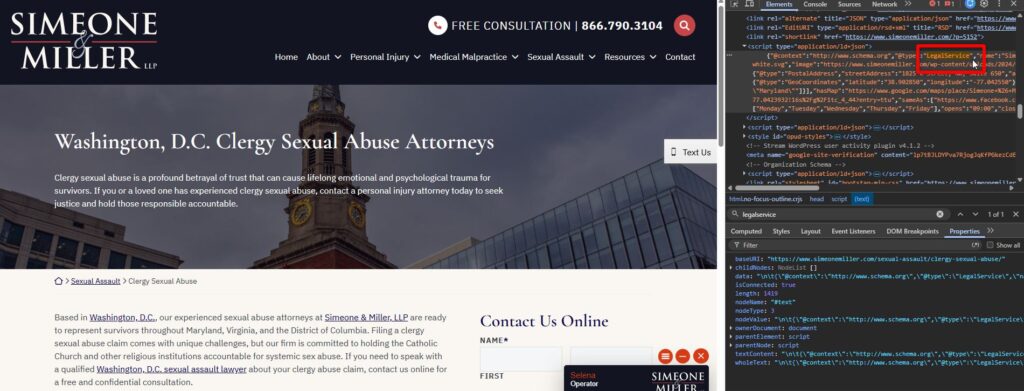
Schema markup is structured data you add to your site so search engines understand what your pages actually represent. For law firms, that means marking up your practice as a LegalService, individual attorneys as Person/Attorney, and FAQs as FAQPage so that content can appear in rich results.
Security is the other non‑negotiable layer. Running your site on HTTPS is a confirmed ranking signal, but more importantly, it tells browsers and visitors that their data is protected in transit. In a profession built on confidentiality and trust, an unsecured site sends the wrong message long before anyone reaches your bio or case results.
Section 6. GEO and zero‑click search
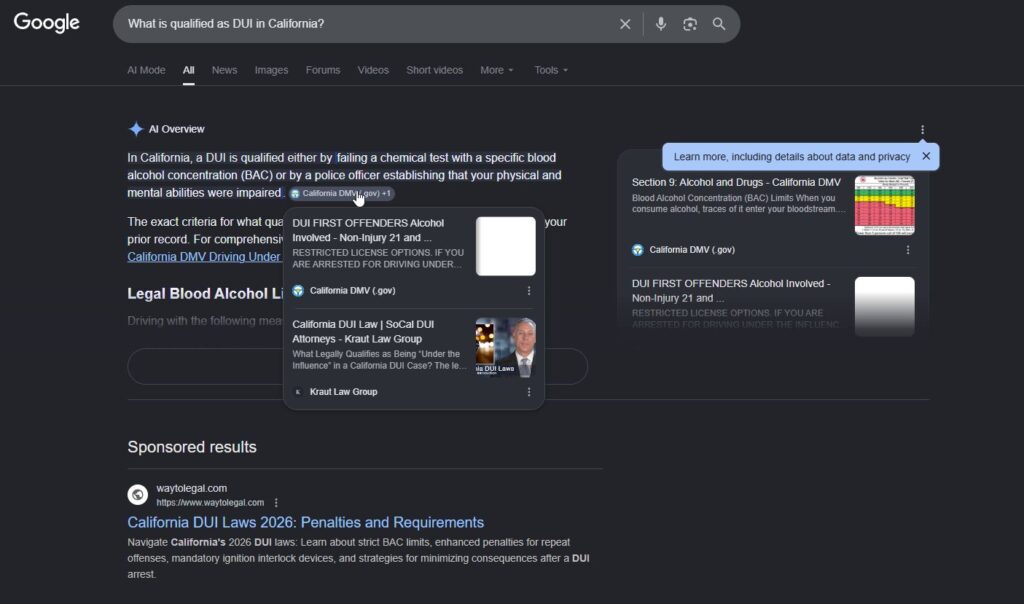
Search is changing faster in 2026 than at any point in the past decade. AI‑powered overviews and rich results now answer many queries directly on the results page, and in 2024 roughly 58–60% of Google searches in the US and EU ended without any click to a website. For lawyers, that means a significant share of potential clients now decide who to trust before they ever leave the search results.
Generative Engine Optimization (GEO) is the emerging practice of structuring your content so it can be discovered and cited by AI systems, not just ranked as a blue link.
Zero-click search results in legal marketing
Zero‑click behaviour is a direct response to how people search under pressure. Someone who has just been arrested, injured or served with papers often wants quick orientation. AI overviews and rich snippets now deliver that basic context in a few lines.
Zero‑click does not always mean “wasted.” When AI overviews or rich results lean on your content, your firm’s name and framing still shape the user’s understanding, build repeated exposure and often lead to fewer but higher‑intent visits later.
🛑Avoid: Burying the direct answer to a question behind three paragraphs of preamble. If someone asks “How long does a personal injury case take in Texas?”, the answer should appear within the first two sentences of your response — not at the end of a 1,200-word article.
Section 7. Link building
Off‑page authority
Sections 1–6 focus on what happens on your own website. The internet, however, is more like a global sandbox: how often your firm is mentioned outside your site — even locally — has a direct impact on visibility. When reputable sites link to your pages, when your firm is cited in news coverage, when legal directories list your attorneys and when other professionals reference your work, search engines treat this as evidence that your site deserves to rank.
Off‑page authority in traditional search
In traditional search, off‑page authority is built mainly through backlinks. Not every link carries the same weight: a single mention in a respected legal publication or regional newspaper is worth far more than dozens of links from low‑quality directories.
For most firms, effective approaches look like:
- Offering expert commentary to journalists so you are quoted when relevant stories break.
- Contributing guest articles to credible legal or local publications, where your byline and link are earned, not bought.
- Maintaining accurate, complete profiles on authoritative directories such as Avvo, Justia, and FindLaw.
- Building real relationships in your professional community that naturally generate citations and references over time.
Off‑page authority in AI search
In AI‑driven search, systems behind AI overviews are trained to pull from sources that appear credible, well‑referenced, and consistent across the web. Brand mentions — even without a direct hyperlink — start to matter more. AI models learn from the full context in which your firm’s name appears, not just from anchor text.
Earned media and paid links
Earned media is the visibility you receive because someone else decided your firm was worth referencing. Paid links are the opposite — and search engines are increasingly good at telling the difference. For law firms, leaning on paid links as a shortcut to authority is risky; investing in genuinely useful work that others want to cite is slower, but more durable.
Section 8. Compliance
Attorneys do marketing the hard way because they do it under rules most industries never have to think about. The ABA Model Rules of Professional Conduct are not a hurdle to get around; they are the foundation for legal marketing that does not backfire years later.
Content compliance
For marketing, the most relevant ABA Rules sit in 7.1–7.5.
- Rule 7.1 prohibits any communication about a lawyer’s services that is false or misleading, including statements that create unjustified expectations. Claims like “the best personal injury lawyer in the city” or language that implies guaranteed outcomes sit squarely in the danger zone.
- Rule 7.2 permits advertising but limits how you do it. In particular, it bars giving anything of value to someone in exchange for recommending your services.
- Rule 7.3 covers solicitation of prospective clients, especially when they are vulnerable. It restricts real‑time, direct contact with people who have not asked to be contacted.
- Rule 7.4 limits how you describe practice areas and specialisation. Unless you hold an approved certification, you cannot present yourself as a “specialist” or “expert” in a given field.
- Rule 7.5 governs firm names and letterhead — including how you present your firm online. It aims to ensure your branding is not misleading about your structure, size, or jurisdictions.
Technical compliance
HTTPS encryption is the baseline. Cookie consent is now a formal requirement in many jurisdictions under frameworks like the GDPR and ePrivacy Directive. Data protection more broadly means having a privacy policy that matches what you actually do.
Finally, your off‑page footprint also has a compliance dimension. Regularly auditing your backlink profile lets you spot and disavow harmful patterns before they cause real ranking damage.
Section 9. Analytics
In legal SEO, it helps to separate leading indicators from lagging ones.
Leading indicators are the early signals that your strategy is moving in the right direction:
- Rankings show where your pages appear for target queries. A practice page moving from position 18 to 6 is an early sign that traffic and enquiries are likely to follow.
- Organic traffic measures how many visitors arrive from search engines.
- Click‑through rate (CTR) shows what percentage of people who see your result actually click. Low CTR with good rankings usually signals a weak title or meta description.
- Impressions tell you how often your pages appear in results at all.
- Crawl and indexing health shows whether Google can access and index your pages reliably.
Lagging indicators are the business outcomes that confirm whether the effort was worth it:
- Leads and enquiries — calls, forms, and chats that originate from organic search.
- Signed cases show how many of those leads became clients.
- Cost per acquired client divides what you spent on SEO by the number of clients it generated.
- Revenue from organic search reflects the total value of cases that started with SEO.
- Branded search volume — how often people search for your firm by name — grows slowly as your reputation builds.
🛑Avoid: Judging your SEO investment at the three-month mark. Most legal content takes four to eight months to reach its ranking potential. Pulling back too early is one of the most common reasons firms conclude that SEO “doesn’t work.”
Section 10. How to approach SEO: DIY, agency, and CounselRank
DIY SEO
In the early stages of building your online presence, doing SEO yourself is often the sensible path. The basics — setting up and maintaining your Google Business Profile, publishing useful blog posts, and making straightforward on‑page improvements — are learnable, and the main cost is your time.
- Cost: roughly $100–1,000 per month in tools and resources.
- Benefit: full control — nobody understands your firm, clients, and local market better than you do.
- Disadvantage: bandwidth — inconsistent effort stalls progress, and a full caseload leaves little time for structured SEO work.
Agency‑led SEO
For multi‑location or nationally operating firms, a specialist SEO agency can provide capacity you cannot realistically build internally.
- Cost: typically $3,000–10,000 per month, with niche legal agencies at the higher end.
- Benefit: capacity — access to a full team of strategists, writers, and technical specialists.
- Disadvantage: distance — without close oversight, your firm’s voice and local nuance can get diluted.
Game changer: CounselRank
CounselRank is built for the middle stage. It focuses on the ongoing specialist work of local SEO and AI‑era visibility — the two areas that matter most for firms that want to dominate their geographic market and show up reliably in AI‑powered search, without taking on a heavyweight agency relationship.
- Cost: $749 per month — closer to a focused subscription than a full agency retainer.
- Benefit: specialisation — strategy, content, and positioning built exclusively for law firms.
Bonus Section. Tools for Legal SEO
| Section | Operations | Tools |
|---|---|---|
| 1 – Introducing Legal SEO | On-page structure analysis (headings, internal links, page clarity) | Screaming Frog – free plan up to 500 URLs; Hemingway Editor – free web version |
| 2 – Strategy | Keyword research · Content clustering · Audience & intent analysis · Editorial planning | Ahrefs – 7-day trial ($7); Semrush – 7-day free trial; Google Keyword Planner – free |
| 3 – Content Strategy | YMYL/EEAT content production · Evergreen guides · Lead magnets | Claude – free plan; Jasper – 7-day free trial; Surfer SEO – demo available |
| 3 – Content Strategy | Competitor content gap analysis | Ahrefs – content gap tool; Semrush – topic research; AlsoAsked – free plan |
| 4 – Local SEO | GBP management · NAP consistency | Google Business Profile – free; BrightLocal – 14-day free trial; Whitespark – free plan |
| 4 – Local SEO | Review generation & reputation management | Birdeye – demo only; Grade.us – 14-day free trial; Podium – demo only |
| 5 – Technical SEO | Site auditing · Crawl errors · Core Web Vitals · Page speed · Mobile | Google Search Console – free; Screaming Frog – free; PageSpeed Insights – free |
| 6 – GEO & Zero-Click | Structuring content for AI citation · FAQ optimization | Claude – free plan; AlsoAsked – free plan; Schema.org Validator – free |
| 7 – Link Building | Backlink profile analysis · Toxic link auditing | Google Search Console – free; Ahrefs Webmaster Tools – free; Semrush Backlink Audit – limited free |
| 7 – Link Building | Digital PR & media outreach · Guest posting | Featured.com – free; Qwoted – free for sources; HARO (Connectively) – free basic |
| 8 – Compliance | Content compliance review against ABA Rules 7.1–7.5 | Grammarly – free plan; Claude – free plan |
| 9 – Analytics | Rank tracking · Organic traffic · CTR · Crawl health | Google Search Console – free; Google Analytics 4 – free; Google Trends – free |
| 9 – Analytics | Lead tracking · Conversion attribution · Cost-per-client | Google Analytics 4 – free; HubSpot CRM – free plan; Google Sheets – free |